Y-Connect Garden
“Collaboration, Natives, Nature, Environment, Conservation and Teaching”
Overview
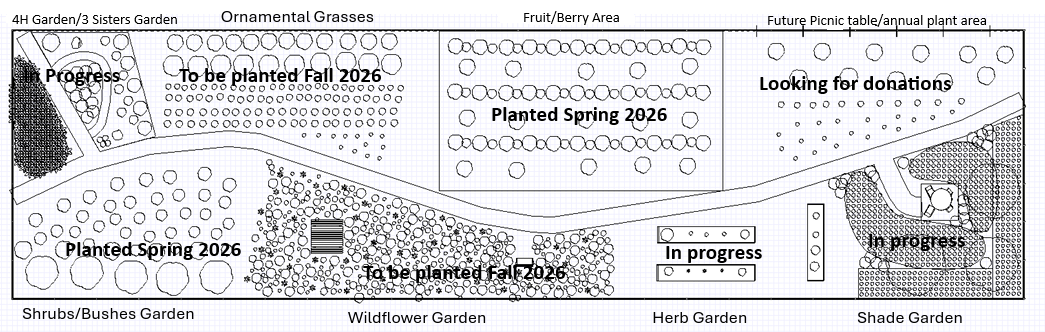
Through a collaborative effort, a native garden and demonstration area is being developed at the Cadillac YMCA. There will be areas for native wildflowers, shrubs, grasses, herbs, fruit trees and berries.
Who is involved?
- Cadillac Area Land Conservancy
- Cadillac Area YMCA
- Baker College
- Wexford-Missaukee ISD (Natural Resource Program Students)
- Cooperative Invasive Species Management Area (CISMA)
- MSU Extension
- Wexford Conservation District
- Volunteers and community donors
Directions
It is located at the current community garden site, in the fenced in area along the edge of the YMCA parking lot.
9845 Campus Drive, Cadillac MI 49601
History
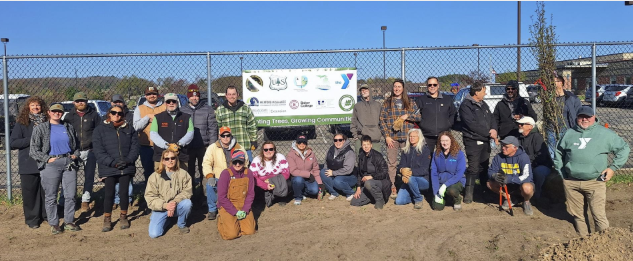
The YMCA established this garden area as a space for community members to have a space to have their own individual garden plots. This was a successful for many years, but over time the garden became abandoned. The YMCA reached out to CALC to see if our organization would be interested in spearheading a group of interested community members to revitalize this space. After several committee meetings, the idea of having a space to feature native plants and to have an outdoor educational space was born. A grant was received for 20 large trees, and the garden kick-off was on May 8, 2026 with over 30 volunteers showing up to help plant these trees. This completed Phase I of the project. Phase II will commence in the fall of 2026 with the planting of native wildflower and grass seeds. Currently, the garden has an area planted with native shrubs, and orchard and fruit demonstration area and an area for herbs.
Want to help?
Donations are always welcome for seed, fertilizer, signs….you can use the donate button at the top of this page and indicate that it is for the YMCA garden.
Volunteers are needed and wanted!! People to weed and plant….the gate is always unlocked at the Y. Contact CALC at sue.conradson@calc-landtrust.org or friend us on Facebook to find out when our group volunteer days are.
Want more information on Native Plant Gardens in Michigan?
Native plants offer the perfect combination of beauty and function, making them an excellent choice for ornamental gardens. Their colorful blooms, unique textures, and seasonal interest create vibrant landscapes while providing essential food and habitat for Michigan’s pollinators, birds, and other wildlife. Because they are adapted to our local climate and soils, native plants are generally more drought-tolerant, require less maintenance once established, and help create healthier, more resilient landscapes.
Interested in creating your own native garden? Visit Go Beyond Beauty to learn more about the benefits of native landscaping and find resources for getting started.